
New Tech Research and Market Trends
-

Rooibos boosts Tilapia growth in breakthrough study
The Rooibos–tilapia study underscores how South Africa’s biodiversity can fuel innovation in sustainable aquaculture, strengthening food security.
-
MSD Animal Health launches AI-powered sea lice and biomass monitoring system
FALCON, the newly-launched system, employs high-resolution imaging to capture thousands of daily images and a neural network to automatically detect lice and assess welfare.
-
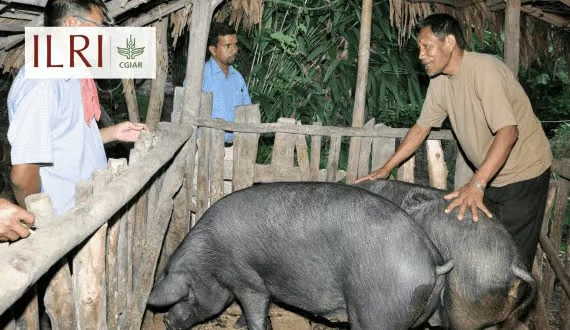
Uganda rolls out digital messaging platform to boost extension support for smallholder pig farmers
The PigSmart platform gives up-to-date information for extension service providers, while delivering multimedia solutions directly to farmers.
-
dsm-firmenich unveils AI tool to boost dairy farm management at Agroleite 2025
With Lore™, dsm-firmenich aims to help dairy farmers harness the power of artificial intelligence to make smarter, faster, and more sustainable decisions.
-
New study confirms high risk of pig tapeworm in Northern Uganda
The researchers warn that without immediate interventions, Uganda’s northern districts could remain a reservoir for the parasite, undermining national and global eradication efforts.
-
FMN’s Premier Feed Mills expands poultry feed portfolio with LayerWise launch
This new feed promises to ensure consitent egg yolk color and promote poultry health.
-
Purina Institute launches free nutrition handbook to support veterinarians
The institute hopes to empower veterinary teams to integrate nutrition into routine care by offering a structured, product-agnostic guide.
-
Machine learning study projects shifting livestock capacity in East Africa
By linking remote sensing with climate projections, the approach provides policymakers with an evidence-based roadmap for designing climate-smart interventions.
-
Researchers push for region-tailored vaccines to combat African Swine Fever
The scientists recommend further research into matching vaccines to virus types, while also exploring new vaccine designs that could provide broader protection.
-
Study sheds light on Crimean-Congo haemorrhagic fever risks in livestock
The Crimean-Congo haemorrhagic fever virus is also endemic in Africa and has case fatality rate of 40%.